
Non-Nutritive Sweeteners (Artificial Sweeteners): What People Should Know

Updated: 1 day ago
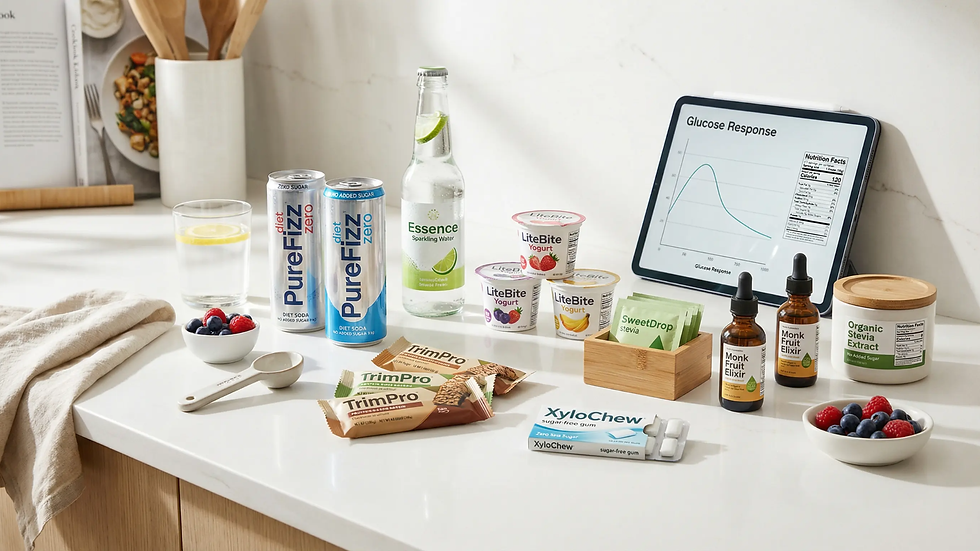
If you’ve ever picked up a “diet” soda, sugar-free yogurt, protein bar, or “no sugar added” gum, you’ve seen non-nutritive sweeteners (NNS). These are also called artificial sweeteners, low-calorie sweeteners, noncaloric sweeteners, or intense sweeteners.
Many people often ask the question:
“Are artificial sweeteners safe, and are they actually better than sugar?”
The honest answer is: for most people, small to moderate amounts are considered safe, but they aren’t a magic fix for weight loss or long-term metabolic health. Let’s break it down in a practical way.
What are non-nutritive sweeteners (NNS)?
They are often used to replace sugar in foods and drinks to reduce calorie content or manage blood sugar levels.
They are different from nutritive sweeteners like table sugar (sucrose), corn syrup, honey, agave, and other added sugars that contain carbohydrates and provide energy.
How are non-nutritive sweeteners regulated?
In the U.S., non-nutritive sweeteners are regulated by the FDA either as food additives (which require safety review before marketing) or as ingredients considered GRAS (“generally recognized as safe”) under specific conditions.
FDA-approved high-intensity sweeteners
The FDA lists six high-intensity sweeteners approved as food additives in the United States:
Saccharin
Aspartame
Acesulfame potassium (Ace-K)
Sucralose
Neotame
Advantame (each approved for specific uses and with established acceptable daily intake levels)
What about stevia and monk fruit?
Some sweeteners people commonly call “natural,” like stevia (steviol glycosides) and monk fruit (luo han guo), are also widely used and listed by the FDA in consumer resources, with published reference ranges for sweetness intensity. (These are generally recognized as safe when used within recommended limits.)
Common types of sweeteners (simple categories)
You’ll typically see sweeteners grouped into these practical categories:
1) High-intensity sweeteners (very sweet, very small amounts)
Examples: aspartame, sucralose, saccharin, Ace-K, stevia, monk fruit
These are often hundreds to thousands of times sweeter than sugar, which is why only tiny amounts are needed.
2) Sugar alcohols (polyols)
Examples: xylitol, sorbitol, mannitol, erythritol
These provide sweetness with fewer calories than sugar and are common in sugar-free candy, gum, and “keto” snacks.
Where are NNS found?
Non-nutritive sweeteners show up in thousands of products, such as:
Diet sodas and flavored waters
Yogurts and desserts
Sugar-free gum and candy
Protein shakes and bars
“No sugar added” packaged foods
And manufacturers often blend multiple sweeteners to improve taste.
Potential benefits (when used the right way)
Non-nutritive sweeteners can be helpful when they replace a high-sugar habit.
✅ Helpful situations
You drink sugary beverages daily and want a step-down option
You have diabetes or prediabetes and are trying to reduce sugar intake
You’re working on weight loss and need a realistic transition plan
Swapping sugar-sweetened drinks for low- or no-calorie versions can reduce overall calorie and sugar intake—as long as you don’t “make up” for it later with extra food.
Side effects and who should be cautious
Most common side effect: GI symptoms (especially with sugar alcohols)
For many people, NNS are tolerated well. But sugar alcohols are a common trigger for:
gas
bloating
stomach cramps
diarrhea
This is dose-dependent: the more you eat, the more likely symptoms become.
Important medical exception: phenylketonuria (PKU)
People with PKU must avoid aspartame, because they cannot metabolize phenylalanine properly.
What about long-term health concerns?
This is where things get more complicated.
1) Weight loss: not a guaranteed win
In real life, long-term weight outcomes with NNS are mixed. One reason is behavioral: if someone thinks they “saved calories,” they may subconsciously eat more later.
2) Gut microbiome: possible effects, but not the full story yet
A major randomized trial published in Cell found that sweeteners altered the microbiome and that saccharin and sucralose were associated with changes in glucose responses in some people—suggesting effects can be personalized and dose-dependent.
3) Observational studies show associations, not proof
Large population studies often find that people who use more diet drinks and artificial sweeteners also have higher rates of metabolic disease—but these studies cannot fully prove cause and effect. (For example, people at higher risk may choose diet products more often.)
The WHO’s 2023 recommendation (and what it means for you)
In 2023, the World Health Organization (WHO) issued guidance recommending against using non-sugar sweeteners specifically for weight control or reducing risk of chronic disease, based on their review of longer-term outcomes.
This does not mean sweeteners are “toxic” or that you must avoid them completely. It means they may not deliver the long-term health benefits people hope for when used as a primary strategy.
My practical physician take: how to use NNS wisely
Here’s the approach I recommend to most patients:
✅ 1) Use sweeteners as a transition tool, not the foundation
If NNS help you cut back on sugar, that’s a win—especially for beverages.
✅ 2) Keep your “sweet taste” tolerance in check
The goal isn’t to replace sugar with unlimited sweetness. The goal is to gradually prefer less sweet foods overall.
✅ 3) Watch for GI symptoms
If your “keto” snacks or sugar-free candy cause bloating or diarrhea, sugar alcohols are often the reason.
✅ 4) Choose quality overall
A “sugar-free” label doesn’t automatically mean “healthy.”Prioritize:
minimally processed foods
fiber and protein
balanced meals
water as your main beverage
What should you choose instead of sweeteners?
If you’re trying to cut back on added sugar, try these first:
sparkling water + lemon/lime
unsweetened tea (iced or hot)
cinnamon or vanilla to flavor coffee/oatmeal
berries to sweeten yogurt naturally
gradually reduce sweetener packets over time
Bottom line
Non-nutritive sweeteners are regulated and generally considered safe at typical intake levels, but they are not guaranteed to improve long-term weight or cardiometabolic health on their own.
If they help you reduce sugary drinks and added sugar—they can be a useful tool. But your best results come from focusing on overall eating patterns, not just swapping sweeteners.
Quick FAQs
Are artificial sweeteners safe?
For most people, yes in reasonable amounts. People with PKU must avoid aspartame.
Which sweeteners cause the most stomach issues?
Sugar alcohols (polyols) are the most common culprit for bloating and diarrhea.
Are “natural” sweeteners like stevia automatically better?
Not necessarily. “Natural” does not always mean “healthier.” What matters most is total dietary pattern and how often you use them.
Is diet soda better than regular soda?
Usually, yes—if it replaces regular soda and helps reduce sugar intake. But water is still the best daily beverage.


Comments